
What Does “Service AdvanceTrac” Mean on a Ford? Here’s What to Do
Biener Ford Blog
What Does “Service AdvanceTrac” Mean on a Ford? Here’s What to Do
A practical guide for Ford drivers trying to decide whether this warning means pull over now or schedule service this week.
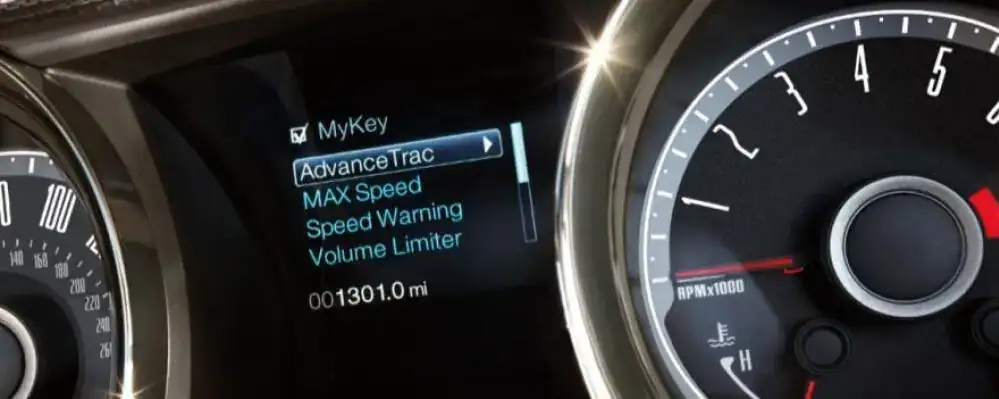
You are sitting in a parking lot in Hicksville, the truck is running fine, and there is a message on your dash that was not there yesterday. “Service AdvanceTrac.” It does not say stop the vehicle. The truck is not shaking, pulling, or doing anything strange. But the message is there and you need to decide what to do next. This guide explains what AdvanceTrac is, what that specific message means, what the most common causes are, and whether you need to call the shop right now or can wait until the week shakes out.
What AdvanceTrac Actually Is
AdvanceTrac is Ford’s electronic stability control system. It runs continuously in the background every time you drive and monitors four things at once: how fast each wheel is spinning, the angle of the steering wheel, how much the vehicle is rotating side to side, and what the throttle is doing. It uses all of that data to detect when the vehicle is starting to skid or lose control and responds in fractions of a second by reducing engine power, applying the brakes to individual wheels, or both.
On an F-150, this system works together with the antilock braking system and the traction control system. They share sensors and in many cases share a control module. When one of them has a problem, the others often show up on the dash at the same time. That is why you sometimes see the traction control light, the ABS light, and the AdvanceTrac message appear together. They are related systems and a single failing component can affect all of them simultaneously.
Ford has required AdvanceTrac on its vehicles since 2012, and for good reason. On a heavy truck like an F-150, the difference between a manageable skid and a real problem can come down to whether that system is working correctly. That context matters when you are deciding how urgently to deal with the warning.
What “Service AdvanceTrac” Means vs. the Traction Control Light
These are two different things and it is worth knowing the difference.
The traction control indicator, which usually looks like a car with wavy lines underneath it, lights up briefly and goes out when the system activates and does its job. If you accelerate on a wet road and the rear wheels start to slip, you might see that light flash for a second while the system corrects it. That is normal. That is the system working exactly as intended.
“Service AdvanceTrac” is a different message entirely. It means the system has detected a fault within its own components and has partially or fully disabled itself as a result. The truck is not telling you it caught a skid. It is telling you it found something wrong with the system and can no longer guarantee it will work correctly if you need it. That distinction matters.
When you see “Service AdvanceTrac,” the stability control system is effectively off until the fault is diagnosed and cleared. The truck will still drive. The engine still runs. The regular brakes still work. But the electronic safety net that catches skids and loss of control is no longer operating. On dry pavement in normal conditions, most people never notice. On a slippery road, in an emergency stop, or in a sudden evasive maneuver, the absence of that system is real.
For a Ford overview of how the system is supposed to work, visit Ford’s AdvanceTrac support page. To understand the braking side of the system, Ford also explains how anti-lock braking works.
The Most Common Causes
Most “Service AdvanceTrac” messages on an F-150 come from a small group of common faults.
A dirty or damaged wheel speed sensor
This is the most common cause by a wide margin. Each wheel has a speed sensor that feeds real-time data to the AdvanceTrac module. These sensors sit close to the road and get hit with road salt, mud, and debris every day. When one gets coated in grime, physically damaged, or develops a corroded connector, it sends incorrect or inconsistent data and the system flags a fault. On Long Island, where road salt is heavy from November through March and the roads between Mineola and the expressway see serious winter treatment, corroded wheel speed sensor connectors are extremely common. This is a relatively straightforward repair. The sensor itself is inexpensive and the job is not particularly labor-intensive. If this is the cause, consider it a minor fix. For more on how salt and winter conditions affect your Ford, this Ford service intervals guide is worth reading.
A steering angle sensor that needs recalibration
Your F-150 has a sensor that measures exactly where the steering wheel is pointed at any given moment. AdvanceTrac uses this data to understand whether the vehicle is going where the driver intends. If the steering angle sensor loses its calibration, which can happen after a wheel alignment, after hitting a pothole hard, or sometimes after a battery replacement, it sends incorrect data and the system disables itself. The fix for this is recalibration using a diagnostic tool. It is not a parts replacement. It is a software procedure. Quick, inexpensive, and done at a dealer service visit.
A weak or failing battery
This one surprises people. AdvanceTrac and the ABS system require stable voltage to function correctly. When a battery is getting weak and voltage drops below a certain threshold, especially during cold starts or when multiple electrical loads are running at once, these systems can throw fault codes. If your “Service AdvanceTrac” message appeared around the same time you noticed the engine cranking a little slowly on cold mornings, or if your battery is more than three to four years old, start there. Battery testing is quick and free at most service departments. It is worth ruling out before paying for deeper diagnostics.
An ABS module issue
This is the least common cause and the most expensive one. The ABS module is the control unit that processes all the sensor data and coordinates the system’s responses. When the module itself fails, everything that depends on it, including AdvanceTrac and traction control, goes down at once. You will typically see multiple warning lights appear together in this scenario. ABS module replacement is a more significant repair. If this is what the diagnostic reveals, you want it done correctly using Ford-specified parts. This post on what to expect at a Ford service appointment covers how the diagnostic process works if you have not been through it before.
Is This a Park-It-Now Situation or a Schedule-It-This-Week Situation?
Here is the direct answer, because that is what you are actually looking for.
In most cases, “Service AdvanceTrac” appearing on dry pavement with no other symptoms is a schedule-it-this-week situation. The truck is drivable. The regular brakes work. The engine and transmission are unaffected. You can drive it to work, drive it home, and bring it in for diagnostics within a few days without creating additional damage or risk in normal driving conditions.
The bottom line: if the truck is driving normally, no other lights are on, and conditions are dry, you can drive it carefully and schedule service within the week. Do not put it off for a month, because you are driving without the system that catches skids, but you do not need to call a tow truck from the parking lot.
What to Check Before You Bring It In
Restart the truck. Turn it completely off, wait 30 seconds, and start it again. Some warning messages are one-time glitches. If it comes right back, it needs attention.
Check for other warning lights. Look carefully at the cluster and note every light that is on. AdvanceTrac plus ABS tells a different story than AdvanceTrac alone.
Think back to recent events. Did you recently have a wheel alignment done? Hit a pothole? Replace the battery? Those details matter.
Use your phone to track symptoms. Before your appointment, jot down when the warning came on, whether other lights were present, and whether it returned after restarting. This guide on simplifying car maintenance with your smartphone can help you keep that information organized.
What to Avoid While the System Is Disabled
Drive a little more conservatively than usual.
Avoid towing or hauling heavy loads if you can help it.
Leave more following distance than usual, especially in wet weather.
Need a Diagnostic Appointment?
If the warning stays on, Biener Ford can help identify the fault quickly and get your F-150’s stability systems back online.
FAQ: Service AdvanceTrac on a Ford
What does “Service AdvanceTrac” mean on a Ford F-150? It means the AdvanceTrac stability control system has detected a fault and has disabled itself.
Is it safe to drive with the Service AdvanceTrac light on? In most cases, yes, carefully and short-term.
What causes Service AdvanceTrac on a Ford? The most common causes are wheel speed sensors, steering angle calibration, battery voltage issues, or ABS module faults.
Can I fix Service AdvanceTrac myself? Sometimes the cause is simple, but proper diagnosis usually requires dealer-level tools.
Why did my ABS light come on too? Because AdvanceTrac and ABS share components and often fail together when one related part goes bad.
How much does it cost to fix? It depends on the cause. A sensor is minor. An ABS module is more significant.
Where can I get it diagnosed on Long Island? Biener Ford can diagnose the warning and inspect the related systems.

0 comment(s) so far on What Does “Service AdvanceTrac” Mean on a Ford? Here’s What to Do