
Uneven Tire Wear: Causes and Fixes for Ford Owners
Biener Ford Tire Service
Uneven Tire Wear: Causes and Fixes for Ford Owners
Learn what uneven tread patterns mean, what causes them, and how to fix the issue before it affects ride quality, safety, and tire life.

Tires aren’t just part of your vehicle, they’re the first point of contact with the road. And when they don’t wear evenly, you’re dealing with more than just a cosmetic issue. Uneven tire wear can lead to longer stopping distances, reduced fuel economy, a rougher ride, and even safety concerns.
If you’re noticing an uneven tire, or want to avoid early replacements, it’s worth understanding the causes of uneven tire wear, the most common tire tread wear patterns, and how to fix uneven tire wear before it costs you more down the road.
Why Tire Wear Matters
Every tire is designed to maintain full, even contact with the pavement. When that balance is thrown off, by poor tire pressure, misalignment, or neglected tire rotations, certain parts of the tread wear down faster than others. This uneven wear compromises traction, shortens tire life, and can strain your vehicle’s suspension components over time.
Drivers across Long Island know just how tough local roads can be. Potholes, curbs, heavy loads, and rapidly changing weather combine to accelerate the wear on your front and rear tires.
The Most Common Causes of Uneven Tire Wear
Understanding the source of the problem is the first step toward fixing it.
1. Improper Inflation
When tires aren’t properly inflated, the tread doesn’t hit the road evenly. Underinflated tires will wear along the outer edges, while overinflated tires will wear down the center. This leads to uneven contact and faster tread loss. Regularly checking your tire pressure helps avoid these problems and keeps you safer on the road.
To avoid excessive wear, always maintain the recommended inflation pressure listed on your driver-side door label. And don’t forget to inspect the valve stem for leaks or damage during tire checks.
2. Poor Alignment
Proper alignment keeps your wheels angled correctly. When your Ford’s alignment is off, tires can drag or tilt, wearing one side of the tread faster than the other. You may notice the vehicle pulling to one side or your steering wheel sitting off-center.
We recommend getting your alignment checked at least once a year, or anytime you hit a major pothole or curb. Regular tire alignment service helps prevent uneven wear and protects your suspension system.
3. Missed Tire Rotations
Uneven wear often appears when tire rotations are skipped. Since front and rear tires handle different forces, rotating them every 5,000 to 7,500 miles, or as recommended, helps spread the workload evenly.
By sticking to a tire rotation Ford schedule, you’ll avoid flat spots, edge wear, and early tire failure.
4. Suspension Problems
Worn or damaged suspension components, like shocks, struts, or ball joints, can cause tires to bounce or tilt, leading to patchy or scalloped tread. If your ride feels bouncy, rough over bumps, or you hear clunks, it’s time to have your suspension system inspected.
Recognizing Tire Tread Wear Patterns
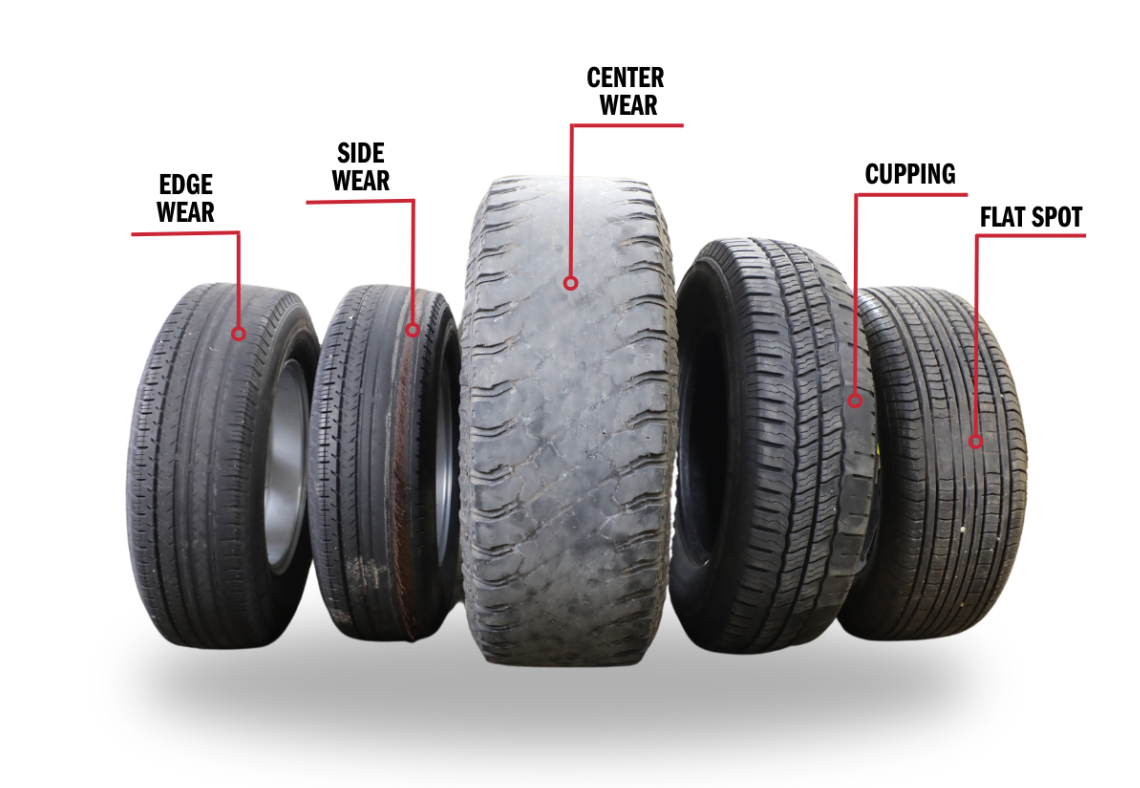
Your tires will usually show you what’s wrong, if you know what to look for. Here are some common tire wear patterns and what they tell you:
- Edge Wear: Caused by low tire pressure or underinflation, wearing down both shoulders of the tread.
- Center Wear: Often a result of overinflation, where the middle wears faster than the edges.
- One-Sided Wear: Worn only on the inside or outside, often a sign of misalignment or damaged suspension parts.
- Cupping: Irregular dips or scallops around the tread. Typically linked to worn shocks or unbalanced wheels.
- Feathering: One side of each tread rib is worn smooth, the other sharp, often caused by poor toe alignment.
When you inspect your tires, run your hand across the tread. Uneven spots, bald edges, or rough transitions can signal deeper issues worth checking out.
How to Fix and Prevent Uneven Wear
There’s no single fix, but a few simple habits go a long way toward preventing uneven tire wear and protecting your investment:
- Check the pressure monthly and before long trips. Always use the correct PSI and inspect each valve stem.
- Tire rotations help balance wear between front and rear tires. Stick to a consistent schedule.
- Get your alignment checked annually or any time your vehicle feels off.
- Don’t ignore signs of wear, inspect your tires visually and by feel.
- Service your suspension system if your ride becomes bouncy, noisy, or unpredictable.
When done regularly, these steps are a small investment that prevents excessive wear and keeps your vehicle performing the way it should.
Expert Tire Care Starts at Biener Ford
If your tires are showing signs of uneven wear, or it’s just been a while since your last service, our team at Biener Ford is here to help. We’ll inspect your tires, check the pressure, rotate or realign them, and make sure your Ford is ready for every road ahead.

0 comment(s) so far on Uneven Tire Wear: Causes and Fixes for Ford Owners